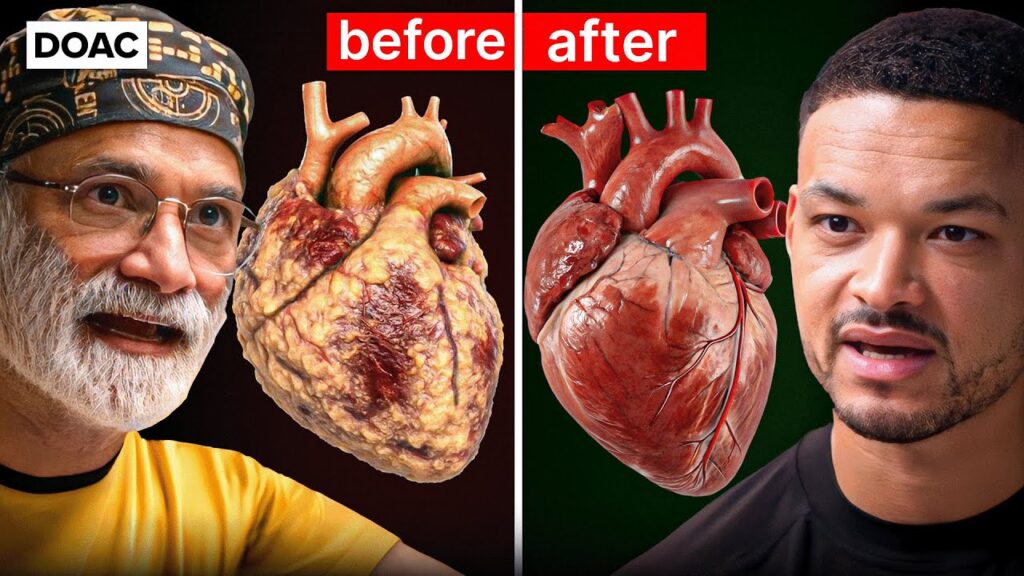
This episode features interventional cardiologist Dr. Pradip Jamnadas, who explains why visceral fat, insulin resistance and chronic inflammation are driving a global epidemic of heart disease and how structured fasting, ketosis, autophagy, stem cell activation, proper exercise, sleep and gut health can reverse much of this risk. A complete guide based on 35 years of clinical experience.
1. Why heart disease is the top killer
Dr. Jamnadas notes that heart disease remains the number one cause of death worldwide and is increasingly affecting people in their 20s to 40s, not just the elderly.
He breaks the heart down into muscle, coronary arteries, valves, peripheral vessels and microvasculature, showing how chronic inflammation and metabolic damage can impair each structure over time, leading to heart failure, angina, and heart attacks.
2. How a heart attack really happens
Using the case of a 28‑year‑old with a major heart attack, he explains that attacks are usually triggered when a small, inflamed plaque inside a coronary artery ruptures and a blood clot suddenly forms on top of it, completely blocking blood flow.
“The issue is not the plaque itself but the combination of plaque rupture + chronic inflammation + excessive clotting tendency. Modern lifestyles create a perfect storm for plaque rupture and acute coronary events even in seemingly young, active individuals.”
3. Sugar, insulin and the making of visceral fat
Glucose is vital fuel, yet when it lingers in the bloodstream it glycates vessels, proteins and hormones, accelerating aging and dysfunction.
Frequent intake of refined carbs and ultra‑processed foods keeps insulin elevated, pushing excess energy into the liver and deep abdominal fat depots, which in turn drives insulin resistance and future diabetes.
4. “Normal” blood sugar with toxic insulin levels
Dr. Jamnadas describes patients whose fasting glucose and HbA1c looked normal, yet oral glucose tests revealed huge insulin surges—a state he calls “hyperinsulinemia in the background.”
These people often have a protruding belly, fatty liver and difficulty losing weight, signaling a metabolic time bomb even before classical diabetes is diagnosed.
5. Why visceral fat is uniquely dangerous
Visceral fat around the organs is portrayed as a highly inflammatory organ that secretes cytokines like IL‑6 and TNF‑α, increasing systemic inflammation and blood clotting.
Imaging now allows clinicians to visualize inflammatory fat around the coronary arteries, liver and pancreas, highlighting the role of ectopic fat as a root driver of cardiovascular and metabolic disease.
6. Calorie restriction versus true fasting
Simple calorie restriction is not the same as fasting. Cutting calories often slows metabolism and promotes loss of both muscle and fat.
In contrast, periods of complete abstention from calories allow insulin to fall, letting the body switch from burning glucose to mobilizing stored fat, especially visceral fat.
7. The 12‑hour metabolic switch and ketones
The first 12 hours without food mainly deplete glycogen from liver and muscles; only after that does the body meaningfully increase fat breakdown and ketone production.
Ketones act as a cleaner fuel, generating less oxidative stress in mitochondria and triggering signaling pathways that support brain function and cellular resilience.
8. Autophagy, mitochondria and cellular renewal
Fasting stimulates autophagy, allowing cells to dismantle damaged organelles (including old mitochondria) and recycle their components, which improves energy efficiency and reduces toxic by‑products.
This cellular “cleaning” process helps clear waste and may underlie the mental clarity and increased energy many people report after well‑structured fasts.
9. Stem cells, growth hormone and repair
Re‑feeding after a fast is associated with a surge in bone‑marrow‑derived stem and progenitor cells that can repair blood vessels and other tissues.
Fasting also boosts growth hormone, which helps preserve lean mass. Exercising near the end of a fast can enhance muscle building while still promoting fat loss.
10. Practical fasting protocols for visceral fat
For people targeting visceral fat, he typically starts with 12:12 time‑restricted eating for a few weeks, then progresses to 18:6 (18 fasting hours, 6‑hour eating window).
In obese or diabetic patients he may add intensive patterns like weekly 48‑hour fasts or cycles of OMAD with periodic 3‑day water fasts, but always under medical supervision.
Practical Q&A · Fasting & Health Guide
11. Sleep, gut health, toxins and the heart
Even a single night of poor sleep can worsen insulin sensitivity the next day. Chronic sleep deprivation amplifies weight gain, blood sugar problems and cardiovascular risk.
Environmental mold, ultra‑processed foods, heavy metals, dysbiosis and leaky gut, plus inappropriate calcium supplementation, all contribute to chronic inflammation and heart disease.
12. Smarter testing: beyond fasting glucose
Relying only on fasting glucose or HbA1c misses years of hidden hyperinsulinemia and vascular damage.
Dr. Jamnadas encourages early use of insulin testing, coronary calcium scores, liver imaging and inflammatory markers, especially in younger adults with central obesity or strong family histories.
5 Key Takeaways
- Fasting is not calorie restriction—it’s an insulin control tool that preferentially burns visceral fat
- Ketosis and autophagy are core mechanisms for cellular cleaning and mitochondrial recovery
- Short, intense exercise (HIIT + resistance) is far better for the heart than long cardio sessions
- Sleep, gut health, and toxin management are as critical as fasting and exercise for cardiovascular protection
- Normal fasting glucose doesn’t rule out problems—check insulin, inflammation, and visceral fat too
Conclusion—A Cardiologist’s Message on Prevention and Reversal
After treating hundreds of thousands of patients over 35 years, Dr. Pradip Jamnadas concludes that medicine should focus less on merely prolonging life and more on maximizing healthspan and functional independence.
This episode provides an integrated understanding of how visceral fat, insulin, fasting, ketosis, autophagy, stem cells, gut health, sleep and toxins converge on heart health. It’s not just about weight loss—it’s about redesigning your cardiovascular and metabolic health. If you’re concerned about belly fat, family history, or prediabetes, use these strategies to create a personalized plan with your healthcare provider.